
Amir Paracha: From Command-Control to Trust-Inspire Leadership
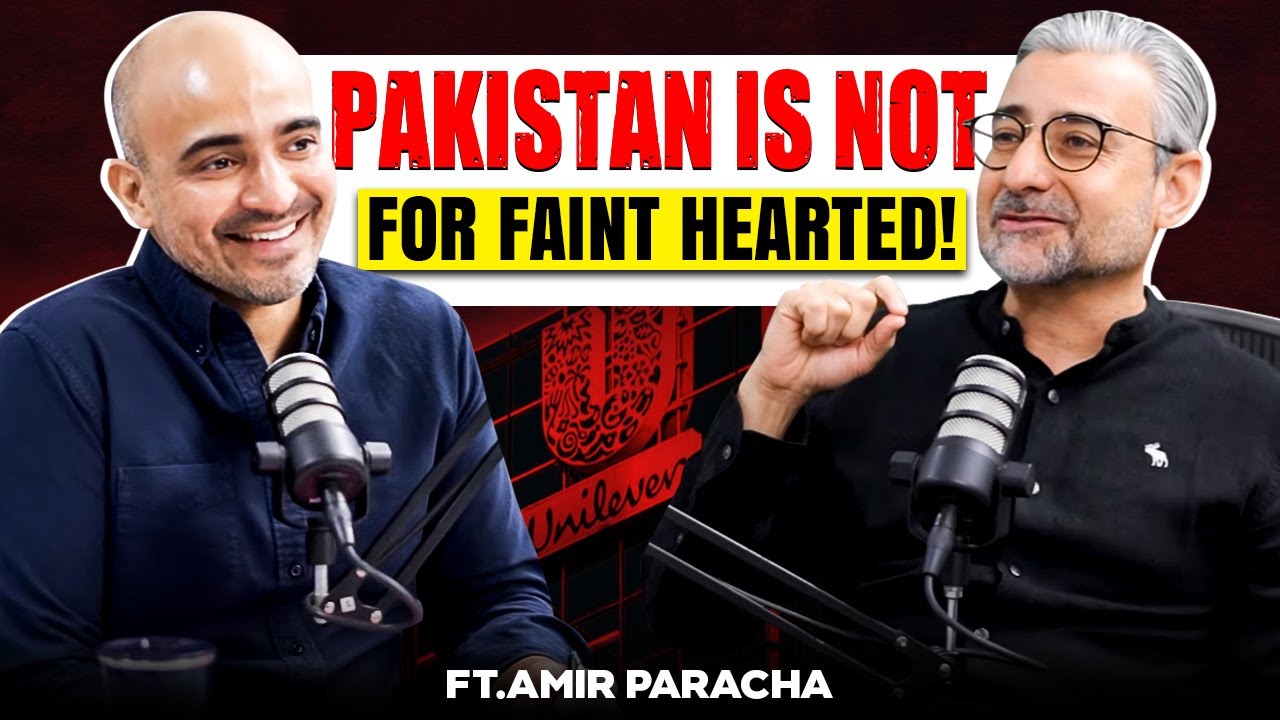
In a landscape where many multinationals are packing their bags, Unilever stands as a titan that has weathered every storm Pakistan has thrown at it for over 75 years. What’s their secret? How do they see opportunity where others see risk?
Building the Brand
I recently sat down with Amir Paracha, the CEO of Unilever Pakistan, for a deeply insightful conversation that went far beyond consumer goods. What I discovered was a powerful, optimistic blueprint for Pakistan’s future, rooted in a fundamental shift in mindset.Amir’s perspective is both pragmatic and inspiring. He acknowledges the challenges, famously quipping that Pakistan “is not for the faint-hearted.”
The Strategic Pivot
Yet, he argues that the country’s demographic dividend,a massive, young population,makes it one of the most exciting consumer markets in the world. Unilever’s success isn’t just about selling high-end products; it’s about deep market penetration. As he pointed out, a staggering 80% of their shampoo sales still come from the humble 5-rupee sachet, a proof to their strategy of making their products accessible to everyone.However, the core of our conversation was about the systemic mindset that holds Pakistan back.
The People Question
Amir describes our national operating system as “Command and Control,” a legacy of historical insecurities and a feudal structure. This top-down, rigid approach stifles innovation, discourages foreign investment, and keeps our institutions from becoming truly independent.The solution, he argues, is a seismic shift to a “Trust and Inspire” model. This means liberalizing the economy, enabling institutions, and, most importantly, trusting our people.
What Comes Next
He believes the government’s role isn’t to control every lever of the economy but to facilitate growth by creating a stable, predictable environment. He points to the organic explosion of solar power in Pakistan as a perfect example. The government provided a slight initial nudge, but the real growth was driven by the people and the private sector responding to a real need.He is incredibly optimistic about the future, not because of any single policy, but because of the unstoppable force of our demographics.
He shared a striking projection: by 2050, as our youth bulge enters its prime working years, our GDP growth could double purely from this demographic shift, regardless of policy changes. When you combine that with the rise of the “knowledge economy,” where digital skills and internet access are the primary assets, Pakistan is perfectly positioned for a quantum leap.This conversation was a powerful dose of strategic optimism.
It was a call to change our national mindset, to sow the seeds of a tree whose shade we may not enjoy ourselves, but our children will. It’s a vision of a Pakistan that is not just surviving, but thriving.
Frequently Asked Questions
Amir Paracha is a prominent figure in corporate leadership featured on the DigiTales podcast with Faizan Sayed, where they discussed their career, insights, and vision for Pakistan's future.
Amir Paracha discussed the state of Pakistan's creative sector on DigiTales, offering a firsthand account of the challenges artists face and the opportunities that remain for those willing to push boundaries.
DigiTales is a podcast hosted by Faizan Sayed, CEO of East River Digital, featuring weekly conversations with Pakistan's most influential leaders across business, culture, policy, and technology. The show covers real stories and hard-won insights from CEOs, artists, politicians, and entrepreneurs.
Guest: Amir Paracha
Amir Paracha is the CEO of Unilever Pakistan, one of the country’s largest multinational consumer goods companies with a 75+ year presence in the market. Under his leadership, Unilever continues to serve millions of Pakistani consumers across income segments.
Host: Faizan Sayed
Faizan Sayed is the founder of DigiTales Podcast and CEO of East River Digital, a performance-led marketing agency with offices in Pakistan, KSA, and the US. Each week, he interviews Pakistan’s most influential leaders across business, culture, and policy.
Category
- Arts & Culture (1)
- Automotive (3)
- Banking & Finance (1)
- Business & Economy (7)
- creative entrepreneurship (1)
- E-Commerce (1)
- Education (1)
- Entertainment (5)
- Entrepreneurship (4)
- Fashion (3)
- Food & Beverage (1)
- growth strategy (1)
- Human Resources (1)
- Insurance & Finance (1)
- Media & Content (2)
- Pakistan-India relations (1)
- Politics (4)
- Social Impact (2)
- Sports (1)
- Technology (1)
- Urban Planning (2)
Recent Post
-
Sheema Kermani: Dance, Culture, and Pakistan's Social Fabric
-
The Survival Playbook: How Ticketwala Launched into a Pandem
-
Zafar Masud on Banking, Rates, and Pakistan's Financial Future
-
The ROI of Hope: Wasif Ali Khan's Foundation for Pakistan's Hidden Talent
-
Liquid Gold: Decoding Karachi's Billion-Dollar Water Crisis
-
The Art of Perception: Syed Jawaid Iqbal on Shaping Reality
-
The Trapped Rat: Sunil Munj on Pakistan's Broken Auto Market
-
The Regulator Solution: Sohail Wajahat's Broken System Fix