
Khurram Husain: Investigating Pakistan’s Geopolitical Realities
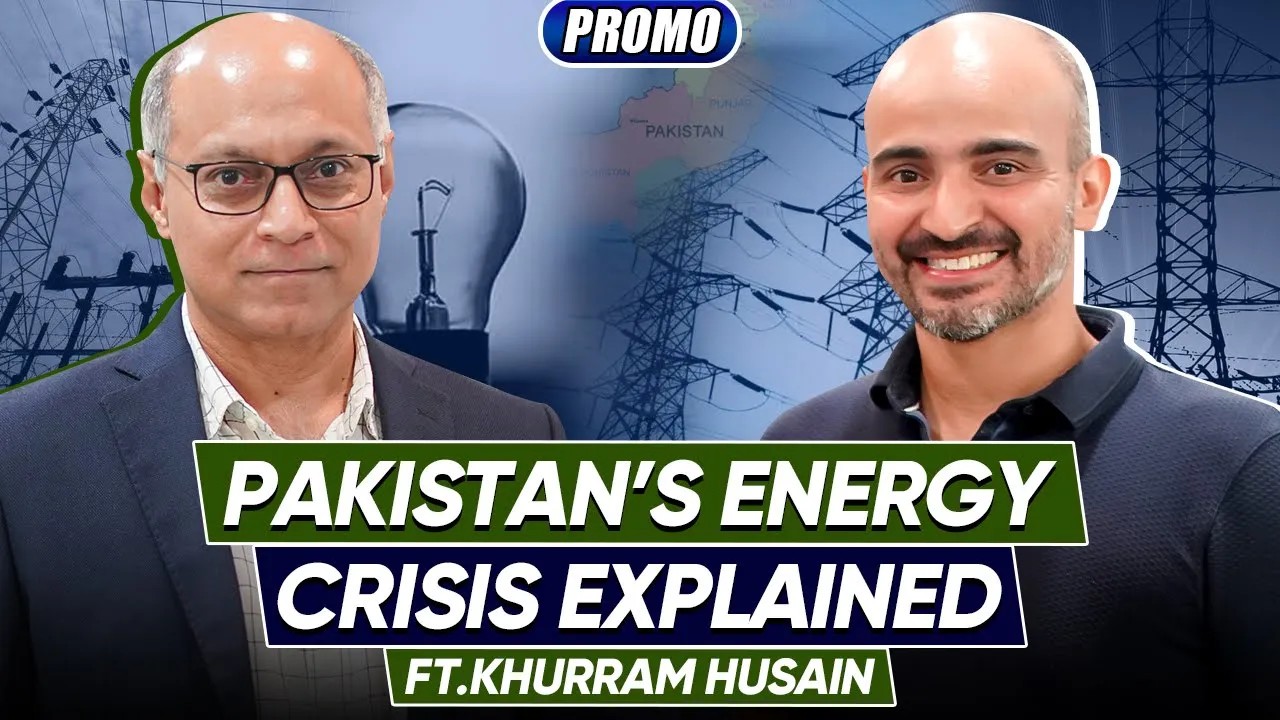
In a revealing episode of Digitales, well-known business and economy journalist Khurram Husain unravels the complex web of decisions and circumstances that led to Pakistan’s current energy crisis. It’s a story that stretches back to the nation’s inception,marked by early gas bonanzas, ambitious state-led infrastructure projects, and a series of critical, often problematic, policy shifts.Initially, Pakistan had very little power generation capacity. The 1950s brought the game-changing Sui gas discovery, followed by the Indus Water Treaty, which spurred large-scale dam and power projects in the 1960s.
The Growth Equation
This era saw a massive, state-owned build-out of generation, transmission, and distribution, largely fueled by abundant and cheap domestic natural gas. This cheap energy became the bedrock of Pakistan’s industrial growth, particularly for sectors like textiles and fertilizers.However, by the late 1980s and early 1990s, the global and local landscape shifted. Governments,including Pakistan’s,found state-led infrastructure financing unsustainable.
The Strategic Pivot
International lenders like the World Bank also pivoted, encouraging private sector involvement. This led to the introduction of Independent Power Producers (IPPs) under policies like the 1994 Power Policy. To attract private investment in a high-risk environment, Pakistan offered attractive terms, including “capacity payments”,guaranteeing payment for available power generation capacity, whether utilized or not,and dollar-indexed returns or insurance schemes against devaluation.While logical in principle, Khurram Husain explains this was meant to be the first step in a larger unbundling and privatization of the entire power sector, akin to the telecom revolution.
The Policy Angle
Unfortunately, the reforms stalled halfway. Pakistan ended up with private power generation but largely state-run, inefficient distribution and transmission. This “hybrid” system, Husain argues, gave Pakistan “the worst of both worlds”: the higher costs associated with private generation (due to risk premiums and guaranteed returns) combined with the inefficiencies of the public sector.Political instability further complicated matters.
What Comes Next
Successive governments often reversed or heavily criticized predecessors’ IPP deals, creating an environment of uncertainty that forced even sweeter deals for subsequent investors. This cycle, coupled with the state’s inability to pay power producers, birthed the monster of “circular debt”,a cascade of unpaid dues throughout the energy chain, often papered over by printing money, which in turn fueled inflation and currency devaluation.The depletion of cheap domestic gas reserves from 2010 onwards was another critical turning point.
Pakistan increasingly turned to expensive imported Liquefied Natural Gas (LNG). This shift meant energy prices became directly exposed to global market volatility and, crucially, the plunging value of the Pakistani Rupee. Husain compellingly argues that a significant portion of today’s “expensive” electricity isn’t just about IPP profits or system inefficiencies; it’s a direct consequence of currency devaluation making imported fuel (and power plant machinery) drastically more expensive in Rupee terms.While vested interests and “billionaire” industrialists certainly play a role in resisting necessary reforms (like market-based gas pricing) to protect their subsidized inputs, Khurram Husain suggests they are rational actors in a flawed system.
The real solution, he posits, lies in adapting to the new energy reality, documenting the economy for a broader tax base, enhancing enterprise competitiveness beyond subsidies, and making a fundamental shift away from political wrangling toward long-term, consistent policymaking. Without these, the cycle of crisis is likely to continue,impacting every Pakistani.For a deeper dive into the historical context, the intricacies of power policies, and Khurram Husain’s insights on the path forward, listen to the full DigiTales episode.
Frequently Asked Questions
Khurram Husain is a prominent figure in journalism featured on the DigiTales podcast with Faizan Sayed, where they discussed their career, insights, and vision for Pakistan's future.
On DigiTales, Khurram Husain shared candid perspectives on building businesses in Pakistan, including the challenges of operating in a developing market and specific strategies that drove their success.
DigiTales is a podcast hosted by Faizan Sayed, CEO of East River Digital, featuring weekly conversations with Pakistan's most influential leaders across business, culture, policy, and technology. The show covers real stories and hard-won insights from CEOs, artists, politicians, and entrepreneurs.
Guest: KHURRAM HUSAIN
Khurram Husain is one of Pakistan's most respected business and economy journalists. He covers monetary policy, energy sector reform, and macroeconomic trends with a focus on historical context and structural analysis that goes beyond daily headlines.
Host: Faizan Sayed
Faizan Sayed is the founder of DigiTales Podcast and CEO of East River Digital, a performance-led marketing agency with offices in Pakistan, KSA, and the US. Each week, he interviews Pakistan's most influential leaders across business, culture, and policy.
Category
- Arts & Culture (1)
- Automotive (3)
- Banking & Finance (1)
- Business & Economy (7)
- creative entrepreneurship (1)
- E-Commerce (1)
- Education (1)
- Entertainment (5)
- Entrepreneurship (4)
- Fashion (3)
- Food & Beverage (1)
- growth strategy (1)
- Human Resources (1)
- Insurance & Finance (1)
- Media & Content (2)
- Pakistan-India relations (1)
- Politics (4)
- Social Impact (2)
- Sports (1)
- Technology (1)
- Urban Planning (2)
Recent Post
-
Sheema Kermani: Dance, Culture, and Pakistan's Social Fabric
-
The Survival Playbook: How Ticketwala Launched into a Pandem
-
Zafar Masud on Banking, Rates, and Pakistan's Financial Future
-
The ROI of Hope: Wasif Ali Khan's Foundation for Pakistan's Hidden Talent
-
Liquid Gold: Decoding Karachi's Billion-Dollar Water Crisis
-
The Art of Perception: Syed Jawaid Iqbal on Shaping Reality
-
The Trapped Rat: Sunil Munj on Pakistan's Broken Auto Market
-
The Regulator Solution: Sohail Wajahat's Broken System Fix