
How KFC Knows Your Chicken’s Grandparents: Raza Pirbhai
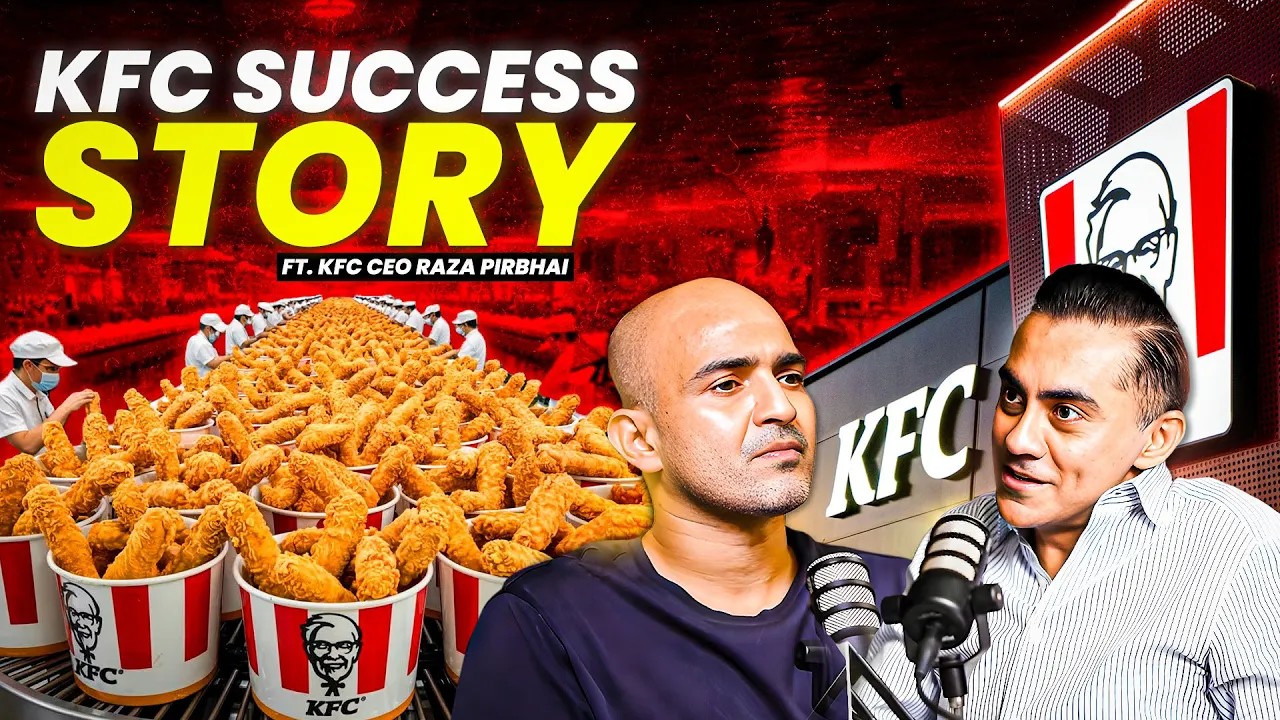
How do they maintain quality and consistency across hundreds of locations in a market as unpredictable as Pakistan? To find out, I sat down with Raza Pirbhai, the CEO of KFC Pakistan, for a lesson in operations, strategy, and leadership. What I learned went far beyond the secret recipe.Raza oversees an empire of over 130 locations, making KFC the largest global fast-food brand in the country. I assumed their success was a simple function of a popular product,fried chicken.
The Strategic Pivot
But the real story is far more complex. Raza revealed that the brand’s initial offering, the Colonel’s Original Recipe, actually failed to take off in Pakistan. Our palate demanded something spicier and crispier. This early pivot to a product tailored for local tastes was the first of many smart decisions.The true genius of KFC’s operation, however, lies in the ecosystem they built.
Building the Brand
Before they could even think about selling chicken, they had to create an entire infrastructure that didn’t exist. Raza shared a mind-blowing fact: for every piece of chicken served, KFC has traceability records that go back not just to the bird’s parents, but to its grandparents. They monitor the feed, ensure it’s antibiotic-free for the last 15 days, and enforce a standard so high that it has enabled their local poultry partners to qualify for global exports.This principle extends to everything. They developed local vendors for sustainable packaging, introduced new cuts of chicken (like the fillet) to the market, and even helped set the quality standards that our national food authorities now use.
Building the Brand: Part 2
They didn’t just enter a market; they built one. This is a powerful lesson: enduring success isn’t just about what you sell, but about the capabilities you build in the ecosystem around you.Raza also debunked some common assumptions. I was surprised to learn that KFC avoids the “dark kitchen” model. Why?
Why This Matters
Because their brand story is built on the physical, brick-and-mortar experience. As Raza put it, “Delivery is not the story. Delivery is just a convenience point.” Their growth strategy is driven by being a visible, tangible part of a neighborhood, not a hidden kitchen serving online orders.His journey from a Kitchen Assistant at Pizza Hut to the CEO of KFC is a proof to the power of culture. He describes culture as the “backbone of the entire empire,” built on respect, empathy, and trust.
It’s this foundation that allows for accountability and growth.This conversation was a deep dive into the machinery of a successful enterprise. From the science behind their 30-minute delivery promise to the massive, untapped potential of Pakistan’s food retail market, Raza Pirbhai laid out a playbook for anyone looking to build a brand that lasts.
Frequently Asked Questions
Raza Pirbhai is a prominent figure in operations featured on the DigiTales podcast with Faizan Sayed, where they discussed their career, insights, and vision for Pakistan's future.
Raza Pirbhai discussed the state of Pakistan's creative sector on DigiTales, offering a firsthand account of the challenges artists face and the opportunities that remain for those willing to push boundaries.
DigiTales is a podcast hosted by Faizan Sayed, CEO of East River Digital, featuring weekly conversations with Pakistan's most influential leaders across business, culture, policy, and technology. The show covers real stories and hard-won insights from CEOs, artists, politicians, and entrepreneurs.
Guest: RAZA PIRBHAI
Raza Pirbhai is the CEO of KFC Pakistan, overseeing an operation of 130+ locations that makes KFC the largest global fast-food brand in the country. He rose through the ranks from Kitchen Assistant at Pizza Hut to CEO, building a supply chain ecosystem that meets global food safety and traceability standards.
Host: Faizan Sayed
Faizan Sayed is the founder of DigiTales Podcast and CEO of East River Digital, a performance-led marketing agency with offices in Pakistan, KSA, and the US. Each week, he interviews Pakistan's most influential leaders across business, culture, and policy.
Category
- Arts & Culture (1)
- Automotive (3)
- Banking & Finance (1)
- Business & Economy (7)
- creative entrepreneurship (1)
- E-Commerce (1)
- Education (1)
- Entertainment (5)
- Entrepreneurship (4)
- Fashion (3)
- Food & Beverage (1)
- growth strategy (1)
- Human Resources (1)
- Insurance & Finance (1)
- Media & Content (2)
- Pakistan-India relations (1)
- Politics (4)
- Social Impact (2)
- Sports (1)
- Technology (1)
- Urban Planning (2)
Recent Post
-
Sheema Kermani: Dance, Culture, and Pakistan's Social Fabric
-
The Survival Playbook: How Ticketwala Launched into a Pandem
-
Zafar Masud on Banking, Rates, and Pakistan's Financial Future
-
The ROI of Hope: Wasif Ali Khan's Foundation for Pakistan's Hidden Talent
-
Liquid Gold: Decoding Karachi's Billion-Dollar Water Crisis
-
The Art of Perception: Syed Jawaid Iqbal on Shaping Reality
-
The Trapped Rat: Sunil Munj on Pakistan's Broken Auto Market
-
The Regulator Solution: Sohail Wajahat's Broken System Fix