
Sheema Kermani: Dance, Culture, and Pakistan’s Social Fabric
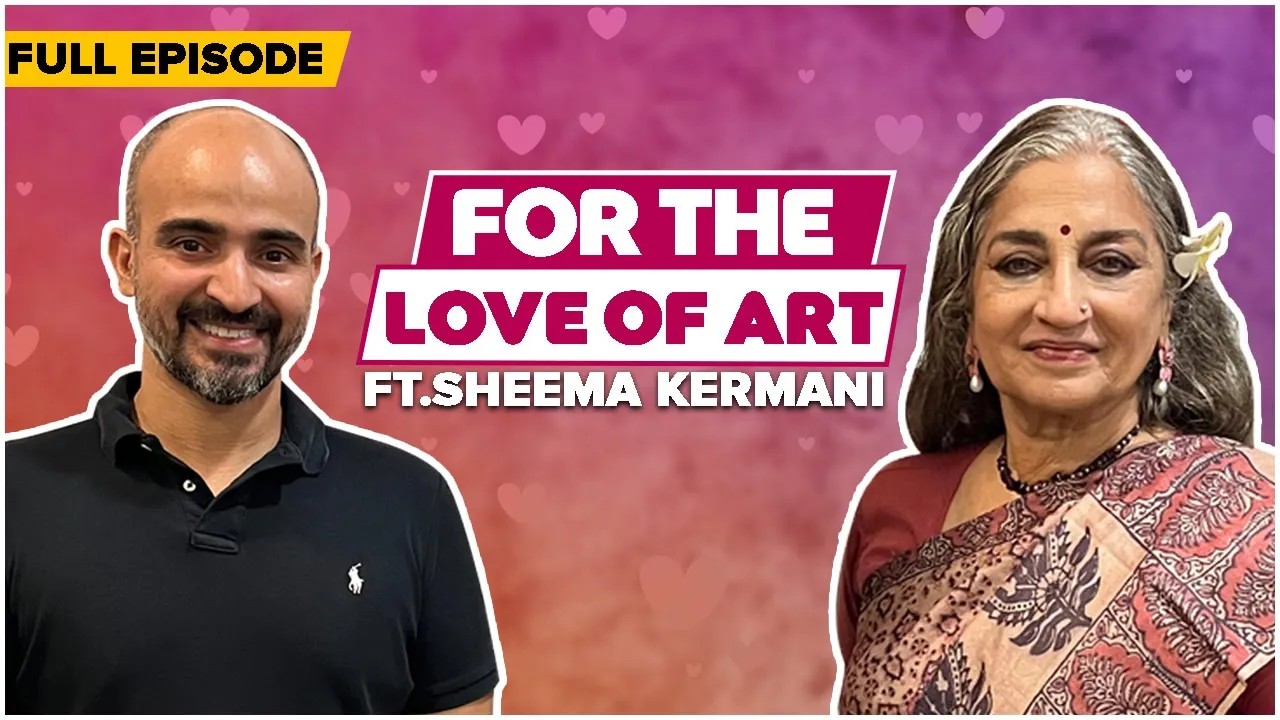
In a world increasingly dominated by fleeting digital trends, what is the role of classical art? And in a society grappling with its identity, how can art become a form of resistance? In a deep conversation on the Digitales podcast, legendary classical dancer and activist Sheema Kermani breaks down her life’s journey, tracing the deep-rooted connections between art, activism, and the fight for Pakistan’s cultural soul.Kermani’s entry into the world of dance was organic, nurtured in a creatively encouraging household. Despite her father being a military man, he was a product of the British army’s tradition, which valued arts and culture as essential to a well-rounded upbringing.
The Pakistan Factor
This environment exposed her to literature, music, and dance from a young age. While she initially pursued painting, she found it isolating. Dance, in contrast, was communal. “Art engages the self,” she explains, “dance engages a community.”This communal power of dance was thrown into sharp relief during the late 1970s and 1980s. Kermani provides a firsthand account of the drastic cultural shift under the state-sponsored Islamization of Pakistan.
The Pakistan Factor: Part 2
This period saw a systematic dismantling of the arts, with an official ban placed on women dancing on stage. For Kermani, this was a critical moment. While many artists fled the country, she saw it as a call to arms. “I said, how can anyone ban dancing?” she recalls.
The Pakistan Factor: Part 2
Her art was no longer just a passion; it became an “act of defiance” against dictatorship and cultural erasure.Kermani makes the striking assertion that today’s times are “darker” than the 80s. Back then, she knew who the adversary was,the state. Today, the opposition is more insidious, diffused within a society where fundamentalism has taken root, partly due to a biased educational curriculum.The conversation also explores into her tireless work as an activist, particularly with the Aurat March.
She reveals its greatest achievement isn’t legislative change, but something more fundamental: starting a national dialogue. “Every home in Pakistan today… will be talking about, ‘Oh, these mad Aurat Marches, what do they want?’” This dialogue, she argues, has shaken the foundations of patriarchy.
What Comes Next
She powerfully reclaims the controversial slogan “Mera Jism, Meri Marzi” (My Body, My Choice) as a simple, non-negotiable demand for consent.Looking to the future, Kermani’s mission is one of preservation. She is working to establish a cultural institution dedicated to the classical arts,a safe, inclusive space for learning, practice, and performance, which she argues is critically absent in Karachi. It’s a legacy project born from a lifetime of defiance, aimed at ensuring the deep, unifying power of art is not lost to future generations. Her story is a powerful reminder that culture is not a luxury; it is the lifeblood of a society, and sometimes, the most powerful act of protest is simply to dance.
Frequently Asked Questions
sheema kermani is a prominent figure in dance featured on the DigiTales podcast with Faizan Sayed, where they discussed their career, insights, and vision for Pakistan's future.
sheema kermani discussed the state of Pakistan's creative sector on DigiTales, offering a firsthand account of the challenges artists face and the opportunities that remain for those willing to push boundaries.
DigiTales is a podcast hosted by Faizan Sayed, CEO of East River Digital, featuring weekly conversations with Pakistan's most influential leaders across business, culture, policy, and technology. The show covers real stories and hard-won insights from CEOs, artists, politicians, and entrepreneurs.
Guest: SHEEMA KERMANI
Sheema Kermani is a Pakistani classical dancer and cultural activist who has performed and advocated for the arts for over four decades. She continued dancing as an act of political resistance during the Zia-era ban on women performing on stage, and is a founding figure of the Aurat March movement in Pakistan.
Host: Faizan Sayed
Faizan Sayed is the founder of DigiTales Podcast and CEO of East River Digital, a performance-led marketing agency with offices in Pakistan, KSA, and the US. Each week, he interviews Pakistan's most influential leaders across business, culture, and policy.
Category
- Arts & Culture (1)
- Automotive (3)
- Banking & Finance (1)
- Business & Economy (7)
- creative entrepreneurship (1)
- E-Commerce (1)
- Education (1)
- Entertainment (5)
- Entrepreneurship (4)
- Fashion (3)
- Food & Beverage (1)
- growth strategy (1)
- Human Resources (1)
- Insurance & Finance (1)
- Media & Content (2)
- Pakistan-India relations (1)
- Politics (4)
- Social Impact (2)
- Sports (1)
- Technology (1)
- Urban Planning (2)
Recent Post
-
Sheema Kermani: Dance, Culture, and Pakistan's Social Fabric
-
The Survival Playbook: How Ticketwala Launched into a Pandem
-
Zafar Masud on Banking, Rates, and Pakistan's Financial Future
-
The ROI of Hope: Wasif Ali Khan's Foundation for Pakistan's Hidden Talent
-
Liquid Gold: Decoding Karachi's Billion-Dollar Water Crisis
-
The Art of Perception: Syed Jawaid Iqbal on Shaping Reality
-
The Trapped Rat: Sunil Munj on Pakistan's Broken Auto Market
-
The Regulator Solution: Sohail Wajahat's Broken System Fix