
Beyond the Headlines: An Insider’s Look at the Unseen Reform
In Pakistan, it’s easy to be cynical. We’re constantly bombarded with headlines about missed targets, political squabbles, and a seemingly endless boom-bust cycle. We’ve heard promises of reform so many times that they’ve lost all meaning.
The Technology Bet
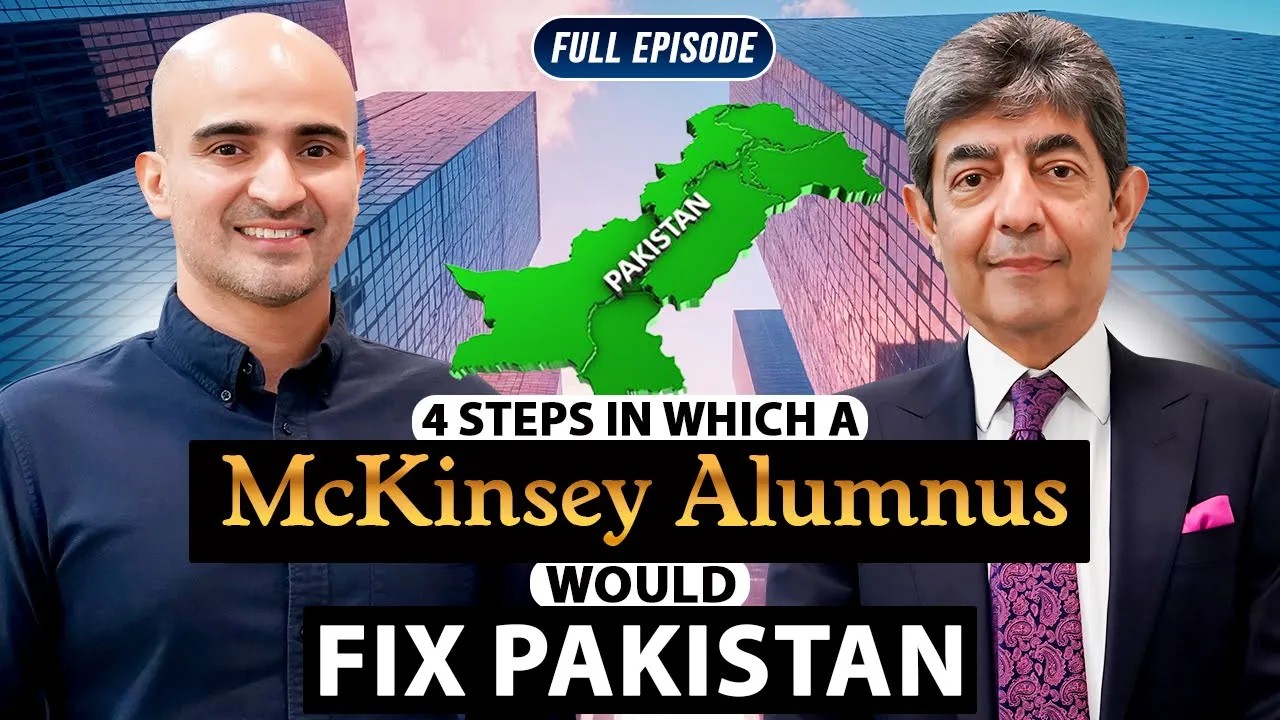
But what if, behind the curtain of daily noise, a series of deep, structural changes are already underway? That was the core of my fascinating and surprisingly optimistic conversation with Salman Ahmed, a former head of McKinsey Pakistan who is now working pro bono at the highest levels of government.What I expected was another high-level discussion of our economic woes. What I got was a detailed, insider’s look at a multi-pronged, technology-driven reform effort that is quietly being implemented right now.
Following the Money
Salman, with his 25 years of experience in global consulting, provided a framework that cuts through the political rhetoric. He argues that our core problem is simple: low productivity. We produce less value per hour, per person, and per dollar than our competitors.The solution, he explained, is a methodical, data-driven overhaul of the state’s machinery, focusing on the three biggest levers: tax collection, state-owned enterprises (SOEs), and the size of the government itself.
Following the Money: Part 2
And for the first time, he revealed specific, tangible actions that are not just plans, but are already in motion.On the tax front, he detailed a landmark change: the separation of tax policy from tax collection. For the first time, the body deciding how much tax should be paid (Ministry of Finance) is separate from the one collecting it (FBR), a move designed to eliminate conflicts of interest and focus on sound economic policy rather than just meeting targets. He also gave a striking example of digitization in action: cameras are being installed in factories at the point of production to track output in real-time, making tax evasion on production nearly impossible.
What Comes Next
Another major step? Faceless, anonymized customs inspections conducted via video to break the link between inspectors and importers, killing opportunities for corruption.This isn’t just another committee making recommendations. Salman described a relentless, multi-wave process overseen by the Prime Minister himself, where ministries are being systematically reviewed, with implementation teams ensuring that approved reforms are actually executed. It’s a journey, not a destination, and it’s a process designed for organic, sustainable change rather than a quick, unsustainable stimulus. This conversation was a rare glimpse into the quiet, difficult, and genuinely hopeful work happening behind the scenes to fix a broken system. It’s a dose of informed optimism that we desperately need.
Frequently Asked Questions
Salman Ahmed is a prominent figure in business featured on the DigiTales podcast with Faizan Sayed, where they discussed their career, insights, and vision for Pakistan's future.
Salman Ahmed discussed the state of Pakistan's creative sector on DigiTales, offering a firsthand account of the challenges artists face and the opportunities that remain for those willing to push boundaries.
DigiTales is a podcast hosted by Faizan Sayed, CEO of East River Digital, featuring weekly conversations with Pakistan's most influential leaders across business, culture, policy, and technology. The show covers real stories and hard-won insights from CEOs, artists, politicians, and entrepreneurs.
Guest: SALMAN AHMED
Salman Ahmed is a former head of McKinsey Pakistan who now works pro bono at the highest levels of Pakistan's government on economic reform. With 25 years of global consulting experience, he leads implementation of technology-driven tax, SOE, and governance reforms.
Host: Faizan Sayed
Faizan Sayed is the founder of DigiTales Podcast and CEO of East River Digital, a performance-led marketing agency with offices in Pakistan, KSA, and the US. Each week, he interviews Pakistan's most influential leaders across business, culture, and policy.
Category
- Arts & Culture (1)
- Automotive (3)
- Banking & Finance (1)
- Business & Economy (7)
- creative entrepreneurship (1)
- E-Commerce (1)
- Education (1)
- Entertainment (5)
- Entrepreneurship (4)
- Fashion (3)
- Food & Beverage (1)
- growth strategy (1)
- Human Resources (1)
- Insurance & Finance (1)
- Media & Content (2)
- Pakistan-India relations (1)
- Politics (4)
- Social Impact (2)
- Sports (1)
- Technology (1)
- Urban Planning (2)
Recent Post
-
Sheema Kermani: Dance, Culture, and Pakistan's Social Fabric
-
The Survival Playbook: How Ticketwala Launched into a Pandem
-
Zafar Masud on Banking, Rates, and Pakistan's Financial Future
-
The ROI of Hope: Wasif Ali Khan's Foundation for Pakistan's Hidden Talent
-
Liquid Gold: Decoding Karachi's Billion-Dollar Water Crisis
-
The Art of Perception: Syed Jawaid Iqbal on Shaping Reality
-
The Trapped Rat: Sunil Munj on Pakistan's Broken Auto Market
-
The Regulator Solution: Sohail Wajahat's Broken System Fix