Author name: admin

Sheema Kermani: Dance, Culture, and Pakistan’s Social Fabric

Sheema Kermani: Dance, Culture, and Pakistan’s Social Fabric In a world increasingly dominated by fleeting digital trends, what is the role of classical art? And in a society grappling with its identity, how can art become a form of resistance? In a deep conversation on the Digitales podcast, legendary classical dancer and activist Sheema Kermani breaks down her life’s journey, tracing the deep-rooted connections between art, activism, and the fight for Pakistan’s cultural soul.Kermani’s entry into the world of dance was organic, nurtured in a creatively encouraging household. Despite her father being a military man, he was a product of the British army’s tradition, which valued arts and culture as essential to a well-rounded upbringing. The Pakistan Factor This environment exposed her to literature, music, and dance from a young age. While she initially pursued painting, she found it isolating. Dance, in contrast, was communal. “Art engages the self,” she explains, “dance engages a community.”This communal power of dance was thrown into sharp relief during the late 1970s and 1980s. Kermani provides a firsthand account of the drastic cultural shift under the state-sponsored Islamization of Pakistan. The Pakistan Factor: Part 2 This period saw a systematic dismantling of the arts, with an official ban placed on women dancing on stage. For Kermani, this was a critical moment. While many artists fled the country, she saw it as a call to arms. “I said, how can anyone ban dancing?” she recalls. The Pakistan Factor: Part 2 Her art was no longer just a passion; it became an “act of defiance” against dictatorship and cultural erasure.Kermani makes the striking assertion that today’s times are “darker” than the 80s. Back then, she knew who the adversary was,the state. Today, the opposition is more insidious, diffused within a society where fundamentalism has taken root, partly due to a biased educational curriculum.The conversation also explores into her tireless work as an activist, particularly with the Aurat March. She reveals its greatest achievement isn’t legislative change, but something more fundamental: starting a national dialogue. “Every home in Pakistan today… will be talking about, ‘Oh, these mad Aurat Marches, what do they want?’” This dialogue, she argues, has shaken the foundations of patriarchy. What Comes Next She powerfully reclaims the controversial slogan “Mera Jism, Meri Marzi” (My Body, My Choice) as a simple, non-negotiable demand for consent.Looking to the future, Kermani’s mission is one of preservation. She is working to establish a cultural institution dedicated to the classical arts,a safe, inclusive space for learning, practice, and performance, which she argues is critically absent in Karachi. It’s a legacy project born from a lifetime of defiance, aimed at ensuring the deep, unifying power of art is not lost to future generations. Her story is a powerful reminder that culture is not a luxury; it is the lifeblood of a society, and sometimes, the most powerful act of protest is simply to dance. Frequently Asked Questions Who is sheema kermani? sheema kermani is a prominent figure in dance featured on the DigiTales podcast with Faizan Sayed, where they discussed their career, insights, and vision for Pakistan’s future. What did sheema kermani say about Pakistan's creative industry? sheema kermani discussed the state of Pakistan’s creative sector on DigiTales, offering a firsthand account of the challenges artists face and the opportunities that remain for those willing to push boundaries. What is DigiTales podcast? DigiTales is a podcast hosted by Faizan Sayed, CEO of East River Digital, featuring weekly conversations with Pakistan’s most influential leaders across business, culture, policy, and technology. The show covers real stories and hard-won insights from CEOs, artists, politicians, and entrepreneurs. Guest: SHEEMA KERMANI Sheema Kermani is a Pakistani classical dancer and cultural activist who has performed and advocated for the arts for over four decades. She continued dancing as an act of political resistance during the Zia-era ban on women performing on stage, and is a founding figure of the Aurat March movement in Pakistan. Host: Faizan Sayed Faizan Sayed is the founder of DigiTales Podcast and CEO of East River Digital, a performance-led marketing agency with offices in Pakistan, KSA, and the US. Each week, he interviews Pakistan's most influential leaders across business, culture, and policy. Category Arts & Culture (1) Automotive (3) Banking & Finance (1) Business & Economy (7) creative entrepreneurship (1) E-Commerce (1) Education (1) Entertainment (5) Entrepreneurship (4) Fashion (3) Food & Beverage (1) growth strategy (1) Human Resources (1) Insurance & Finance (1) Media & Content (2) Pakistan-India relations (1) Politics (4) Social Impact (2) Sports (1) Technology (1) Urban Planning (2) Recent Post Sheema Kermani: Dance, Culture, and Pakistan's Social Fabric The Survival Playbook: How Ticketwala Launched into a Pandem Zafar Masud on Banking, Rates, and Pakistan's Financial Future The ROI of Hope: Wasif Ali Khan's Foundation for Pakistan's Hidden Talent Liquid Gold: Decoding Karachi's Billion-Dollar Water Crisis The Art of Perception: Syed Jawaid Iqbal on Shaping Reality The Trapped Rat: Sunil Munj on Pakistan's Broken Auto Market The Regulator Solution: Sohail Wajahat's Broken System Fix

Sheema Kermani: Dance, Culture, and Pakistan’s Social Fabric Read More »

The Survival Playbook: How Ticketwala Launched into a Pandem

The Survival Playbook: How Ticketwala Launched into a Pandem Every entrepreneur has a story about facing adversity, but few are as dramatic as launching an events company just three months before a global pandemic shuts down all public gatherings. That’s the incredible story of Zayaan Bawany and his co-founders at Ticketwala. My conversation with him on the latest Digitales episode wasn’t just about building a business; it was a lesson in survival, adaptation, and the power of relentless focus.Zayaan and his two best friends came back to Pakistan after studying abroad, armed with a simple idea: to digitize and democratize event ticketing. Building the Brand They saw a market where events were happening, but discovery was broken and purchasing was archaic. They jumped in, but their timing couldn’t have been worse. With just 150,000 rupees left in the bank and a global lockdown in full force, most would have given up. The People Question But this is where their story truly begins.Their survival wasn’t a single pivot; it was a multi-front battle. While competitors went dormant, the Ticketwala team doubled down. They immediately shifted their model to ticket online events,like makeup and fitness classes,and surprisingly, had their best months to date. Building the Brand: Part 2 To keep the lights on and fund their core vision, they launched an entirely separate business: a marketing agency. This adjacent venture not only paid their bills but also funded Ticketwala’s marketing, allowing them to build their brand while the rest of the industry was on pause.But perhaps their most brilliant move was realizing that simply copying an international model wasn’t enough. They had to build for Pakistan’s reality. The Takeaway Their key insight? At large events, the internet never works. So, they invested their limited resources into building a strong offline ticketing and scanning system. This wasn’t a fancy feature; it was a core necessity that became their single greatest competitive advantage, allowing them to reliably service massive festivals where other platforms failed. It’s a powerful lesson in listening to your market instead of just following global trends.From 95% cash-on-delivery to zero, from a fancy office they had to shut down to working out of a house, Ticketwala’s journey is a proof to grit. They survived because they were willing to start a new company to save the first one, because they focused on solving a real, local problem, and because they never lost sight of their long-term vision. This is a story every entrepreneur needs to hear. Frequently Asked Questions Who is Zayaan Bawany? Zayaan Bawany is a prominent figure in business featured on the DigiTales podcast with Faizan Sayed, where they discussed their career, insights, and vision for Pakistan’s future. What business insights did Zayaan Bawany share on DigiTales? On DigiTales, Zayaan Bawany shared candid perspectives on building businesses in Pakistan, including the challenges of operating in a developing market and specific strategies that drove their success. What is DigiTales podcast? DigiTales is a podcast hosted by Faizan Sayed, CEO of East River Digital, featuring weekly conversations with Pakistan’s most influential leaders across business, culture, policy, and technology. The show covers real stories and hard-won insights from CEOs, artists, politicians, and entrepreneurs. Guest: ZAYAAN BAWANY Zayaan Bawany is the co-founder of Ticketwala, Pakistan's leading event ticketing platform. He launched the company just three months before COVID with 150,000 rupees in the bank, survived by pivoting to online events and building an offline-first scanning system that became their core competitive advantage. Host: Faizan Sayed Faizan Sayed is the founder of DigiTales Podcast and CEO of East River Digital, a performance-led marketing agency with offices in Pakistan, KSA, and the US. Each week, he interviews Pakistan's most influential leaders across business, culture, and policy. Category Arts & Culture (1) Automotive (3) Banking & Finance (1) Business & Economy (7) creative entrepreneurship (1) E-Commerce (1) Education (1) Entertainment (5) Entrepreneurship (4) Fashion (3) Food & Beverage (1) growth strategy (1) Human Resources (1) Insurance & Finance (1) Media & Content (2) Pakistan-India relations (1) Politics (4) Social Impact (2) Sports (1) Technology (1) Urban Planning (2) Recent Post Sheema Kermani: Dance, Culture, and Pakistan's Social Fabric The Survival Playbook: How Ticketwala Launched into a Pandem Zafar Masud on Banking, Rates, and Pakistan's Financial Future The ROI of Hope: Wasif Ali Khan's Foundation for Pakistan's Hidden Talent Liquid Gold: Decoding Karachi's Billion-Dollar Water Crisis The Art of Perception: Syed Jawaid Iqbal on Shaping Reality The Trapped Rat: Sunil Munj on Pakistan's Broken Auto Market The Regulator Solution: Sohail Wajahat's Broken System Fix

The Survival Playbook: How Ticketwala Launched into a Pandem Read More »

Zafar Masud on Banking, Rates, and Pakistan’s Financial Future

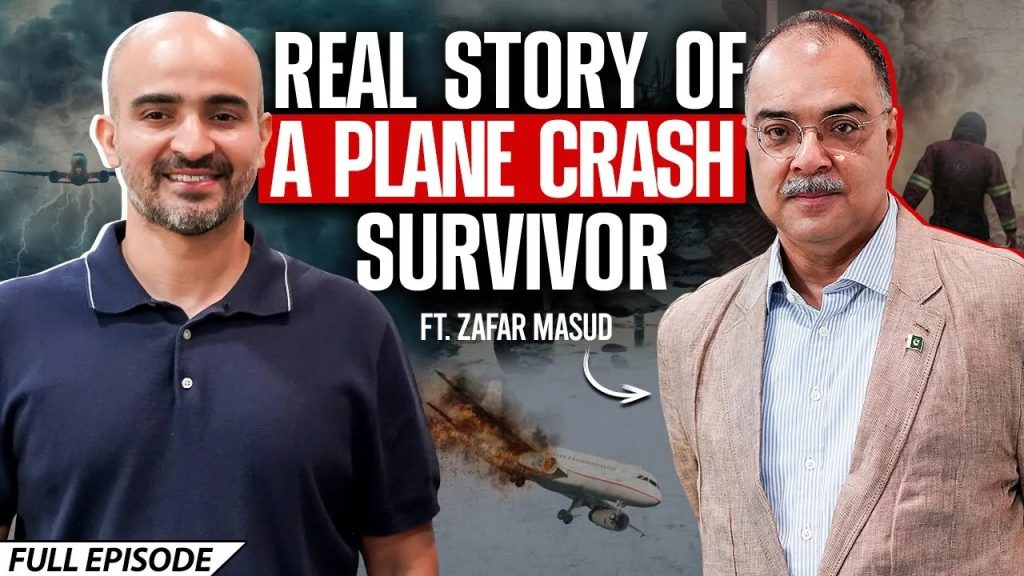
Zafar Masud on Banking, Rates, and Pakistan’s Financial Future A miraculous survivor of the 2020 PIA plane crash, Masud joins host Faizan to reflect on the deep motivations behind his book Seat 1C, while offering unflinching insights into Pakistan’s publishing ecosystem and societal mindset.Masud explains that his near-death experience felt like a “divine inspiration”,a story he was given, and one he felt morally compelled to share with humanity. Yet this conviction met a stark reality: Pakistan, he says, is “no longer a book-reading nation.” Citing well-known publisher Ameena Saiyid, Masud highlights a sobering statistic,a bestseller in Pakistan might sell just 1,000 copies. This low readership has cascading effects on the publishing industry, making it a difficult terrain even for extraordinary narratives.The process of writing and publishing Seat 1C took over four years. The Pakistan Factor Masud recounts the many roadblocks along the way, including a disheartening lack of support from established Pakistani authors when he reached out for guidance or connections to international agents. This experience led him to question whether Pakistanis are “chotay dil ke” (small-hearted), particularly when it comes to sharing space and opportunities. Eventually, it was Ameena Saiyid who connected him with an international agent. Building the Brand Still, it took another year to find a publisher. Western markets, already saturated with survival stories, passed on the manuscript until an Indian publisher recognized its unique appeal for the South Asian audience.Masud also lays bare the financial realities of writing in Pakistan. Authors typically receive only 10–20% royalty on the retail price, while retailers often demand margins of up to 50%. Where Things Went Wrong In many cases, publishers require authors to pre-purchase a substantial number of copies to fund printing costs,an investment Masud made himself. For him, and many others, writing is not financially sustainable; it is a passion project, a moral obligation, or a labor of love.Beyond the publishing world, Masud offers broader reflections on Pakistan’s societal trajectory. He believes the country’s stagnation stems not only from economic hurdles but from a deeper mindset crisis. What Comes Next He calls for a “Charter of Society,” one that prioritizes learning, intellectual curiosity, and mutual support. He also laments the lack of a paid speaking culture, arguing that society undervalues lived experiences and the act of learning from one another. Masud stresses the importance of sincerity with oneself as a foundation for both personal growth and national progress, warning against a fixation on the rituals of religion at the expense of its essential humanistic values.Faizan, the host, shares a personal story about mentorship and paying it forward, reinforcing the episode’s central theme of community and collective upliftment. Masud concludes that true freedom lies not in whether one is self-employed or working a job, but in one’s mindset, values, and clarity of purpose. His story is ultimately a proof to resilience, integrity, and the courage to speak one’s truth,even when the system seems indifferent. With Seat 1C, Masud hopes to spark deeper conversations around empathy, learning, and societal transformation.For a powerful narrative on survival, authorship, and the soul of a society, listen to the full DigiTales episode. Frequently Asked Questions Who is Zafar Masud? Zafar Masud is a prominent figure in banking featured on the DigiTales podcast with Faizan Sayed, where they discussed their career, insights, and vision for Pakistan’s future. What did Zafar Masud say about Pakistan's creative industry? Zafar Masud discussed the state of Pakistan’s creative sector on DigiTales, offering a firsthand account of the challenges artists face and the opportunities that remain for those willing to push boundaries. What is DigiTales podcast? DigiTales is a podcast hosted by Faizan Sayed, CEO of East River Digital, featuring weekly conversations with Pakistan’s most influential leaders across business, culture, policy, and technology. The show covers real stories and hard-won insights from CEOs, artists, politicians, and entrepreneurs. Guest: ZAFAR MASUD Zafar Masud is a Pakistani banker and author who survived the 2020 PIA plane crash in Karachi. He wrote 'Seat 1C' about his experience, and uses his public platform to advocate for a national culture of learning, intellectual curiosity, and mutual support across Pakistan's business community. Host: Faizan Sayed Faizan Sayed is the founder of DigiTales Podcast and CEO of East River Digital, a performance-led marketing agency with offices in Pakistan, KSA, and the US. Each week, he interviews Pakistan's most influential leaders across business, culture, and policy. Category Arts & Culture (1) Automotive (3) Banking & Finance (1) Business & Economy (7) creative entrepreneurship (1) E-Commerce (1) Education (1) Entertainment (5) Entrepreneurship (4) Fashion (3) Food & Beverage (1) growth strategy (1) Human Resources (1) Insurance & Finance (1) Media & Content (2) Pakistan-India relations (1) Politics (4) Social Impact (2) Sports (1) Technology (1) Urban Planning (2) Recent Post Sheema Kermani: Dance, Culture, and Pakistan's Social Fabric The Survival Playbook: How Ticketwala Launched into a Pandem Zafar Masud on Banking, Rates, and Pakistan's Financial Future The ROI of Hope: Wasif Ali Khan's Foundation for Pakistan's Hidden Talent Liquid Gold: Decoding Karachi's Billion-Dollar Water Crisis The Art of Perception: Syed Jawaid Iqbal on Shaping Reality The Trapped Rat: Sunil Munj on Pakistan's Broken Auto Market The Regulator Solution: Sohail Wajahat's Broken System Fix

Zafar Masud on Banking, Rates, and Pakistan’s Financial Future Read More »

Scroll to Top